combines Pallida and potato wart disease resistance
fast and uniform foliage development
high and secure starch yield
high tuberisation
Production Utilization
dehydrated products
starch
Maturity
medium late
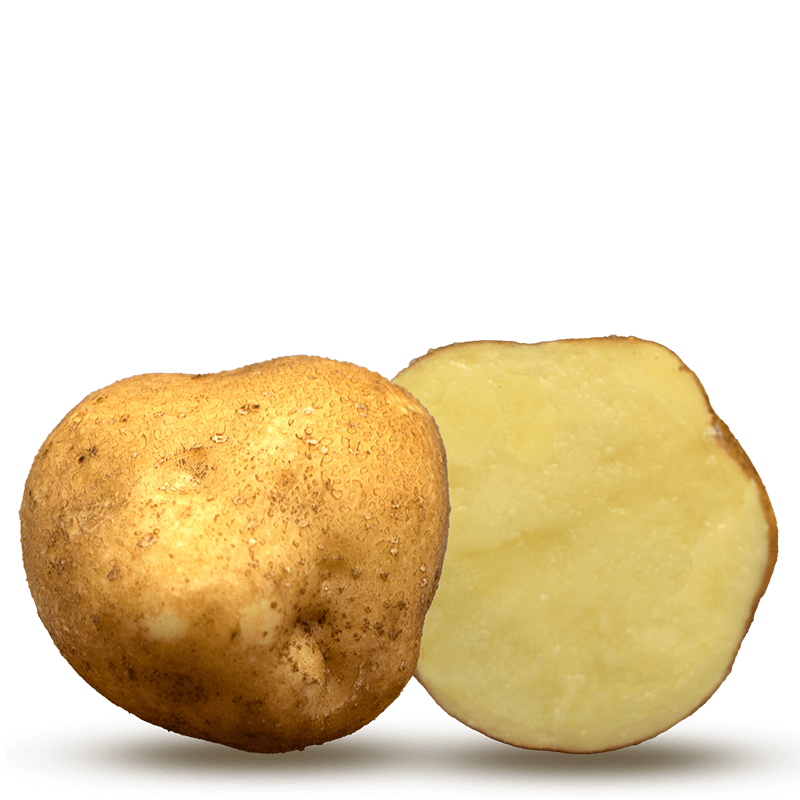
Tuber properties
Tuber shape:
roundoval
Flesh color:
light yellow
Skin appearance:
rough / yellow
Eye prominence:
medium
Inclination | Susceptibility
Rhizoctonia:
low
Tuber rot:
low
Foliar late blight:
medium
Raw discoloration:
no
Resistances
Nematodes:
Ro 1, Ro 4, Pa 2, Pa 3
Resistance to wart diseases:
1 (D1), 2 (G1), 6 (O1), 18 (T1)
y-virus:
very high
leafroll virus:
medium
starch: Production specifications
Location:
all type of soil
Planting material preparation:
it is recommended to condition and prepare the seed
Chemical seed treatment:
recommended against rhizoctonia
Plant canape development:
uniform emergence with rapid foliage development
light soil:
38 cm | 35,000 pcs/ha
Heavy soil:
34 cm | 39,000 pcs/ha
Planting depths + hill shape:
1-2 cm shallower than usual with accurate ridge structure
Fertilization
Nitrogen (N):
160-180 kg/ha incl. Nmin
split the N application, especially on light and irrigated locations
Phosphorus (P2O5):
80-100 kg/ha
Potassium (K2O):
250-300 kg/ha
use chloride-free potassium fertilizer to ensure high starch content; split the potassium application on light and/or irrigated soils
Magnesium (MgO):
80-100 kg/ha
Plant protection
Herbicides:
usage of herbicides containing metribuzin is possible before emergence
Fungicides:
according to local warning service; due to rapid juvenile development, first Phytophthora and Alternaria treatment should be carried out very early and consistently
Insecticides:
according to local warning service (if available)
At harvest considerations:
carefull harvesting; avoid tuber temperatures <10°C; check skin set before harvesting